

- My Quote no products
Wikipedia
Heterodontosaurus
Description
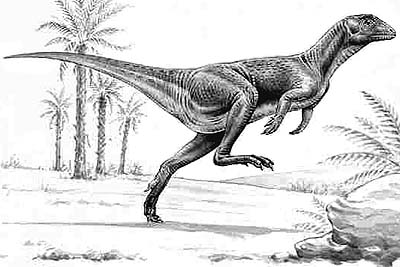
Heterodontosaurus is a genus of heterodontosauriddinosaur that lived during the Early Jurassic period, 200–190 million years ago. Its only known member species,Heterodontosaurus tucki, was named in 1962 based on a skull discovered in South Africa. The genus name means “different toothed lizard”, in reference to its unusual,heterodont dentition; the specific name honors G. C. Tuck, who supported the discoverers. Further specimens have since been found, including an almost complete skeleton in 1966.
Though it was a small dinosaur, Heterodontosaurus was one of the largest members of its family, reaching between 1.18 m (3.9 ft) and possibly 1.75 m (5.7 ft) in length, and weighing between 2 and 10 kg (4.4 and 22.0 lb). The body was short with a long tail. The five-fingered forelimbs were long and relatively robust, whereas the hind-limbs were long, slender, and had four toes. The skull was elongated, narrow, and triangular when viewed from the side. The front of the jaws were covered in a horny beak. It had three types of teeth; in the upper jaw, small,incisor-like teeth were followed by long, canine-like tusks. A gap divided the tusks from the chisel-like “cheek teeth”.
More Information
- Extra: There may be more details in Wikipedia
Fact file
- Pronounced: HET-er-oh-DON’T-oh-sore-us
- Meaning of name: different-teeth lizard
- Length: 1.2m
- Diet: herbivorous
- When it lived: Early Jurassic
(205 million years ago) - Found in: Lesotho, South Africa
Taxonomic details
- Taxonomy: Dinosauria, Ornithischia, Genasauria, Cerapoda, Heterodontosauridae, Heterodontosaurus
- Named by: Crompton and Charig (1962)
- Type species: tucki